Let's be honest. Wedding photography is a high-pressure job. You have one shot to capture once-in-a-lifetime moments under terrible lighting, tight schedules, and demanding clients. If your flash fails, a memory card corrupts, or you miss the first kiss, there are no do-overs. I still remember the absolute panic of shooting my first solo wedding. I had three bags of gear, zero sleep, and a sweaty checklist folded in my pocket.
Over the last decade, I've shot hundreds of weddings across India. Through trial, error, and some painful mistakes, I developed a system that keeps my couple happy, my workflow fast, and my business booked out. Here are my ten non-negotiable rules for wedding day success.
Key takeaways
- Walk the venue and build named shot lists early to prevent last-minute chaos.
- Dual card slots and duplicate gear are non-negotiable for professional wedding work.
- Deliver sneak peeks within 48 hours to leverage the post-wedding excitement.
1. The Pre-Wedding Blueprint (No Room for Guesswork)
Do not show up to a wedding venue cold. A week before the wedding, I hop on a quick call with the couple and the planner to walk through their timeline line-by-line. Planners usually schedule details from a logistics perspective, not a light perspective. You need to verify if their slot for sunset portraits actually aligns with the golden hour in that specific location.
I also ask for a named list of immediate family members. When it is time for family group photos, calling out 'Uncle Ramesh and Aunt Sunita' is ten times faster and more professional than shouting 'bride's family next!' into a loud crowd.
- Check sunset times and cross-reference them with the portrait schedule.
- Get first names of key family members to streamline group portraits.
- Scout the venue at the exact hour you plan to shoot there.
2. Build Comfort Before the Wedding Day
If the first time your couple stands in front of your camera is on their wedding day, they will look stiff and awkward. Stiff photos are not a posing problem; they are a comfort problem. I bundle engagement shoots with all my main wedding packages because they serve as a sandbox. It is where they learn how I work, how to shake off camera shyness, and how to laugh naturally. By the time the wedding day rolls around, I walk in as a trusted friend who happens to carry cameras.
An engagement shoot is the absolute best way to guarantee natural, relaxed expressions on the wedding day.
3. Redundant Backup Gear is Mandatory
If you shoot a wedding with one camera body or single card slots, you are playing Russian roulette with your reputation. Hardware fails. It is not a matter of if, but when. I always shoot on bodies with dual slots, saving raw files to both memory cards in real-time. I also carry a backup body on my shoulder harness and keep duplicate speedlights, lenses, and batteries in my rolling case. If a shutter box goes bust during the main entry, I simply swap bodies in three seconds.
4. Master Off-Camera Flash in Any Space
You will encounter every lighting nightmare possible: direct midday sun at an outdoor ceremony, patchy shadows under trees, and pitch-black reception halls with high, colored ceilings that prevent bouncing light. Do not rely on natural light as an excuse for poor exposures. Learn to set up simple off-camera flash grids. A couple of speedlights on light stands triggered remotely can turn a flat, dim hall into a beautifully dimensional, cinematic space.
5. Focus on the Candids and Transitions
The portrait of the couple looking at the lens is what they'll print for their parents. But the shots of the father wiping a tear, the bridesmaids sharing a laugh while getting ready, and the groom's expression when the doors open are the ones that carry emotional weight. Keep one camera body with a fast prime lens (like a 50mm or 85mm) on you at all times to scan the crowd for these fleeting candid reactions.
6. Coordinate with Your Second Shooter
You cannot be in two places at once. If you are standing at the front of the aisle capturing the bride's walk, your second shooter should be at the back capturing the groom's face. We divide our tasks clearly before the day begins: one focuses on wide storytelling and candids, while the other focuses on close-up details, decor, and secondary angles.
7. Know When to Take Control
During family formal portraits, you need to be assertive, loud, and organized to get people through the group line quickly. But during the rest of the day, you should blend into the background. Wear dark clothing, move quietly, and let the day unfold naturally. Do not turn a real wedding into a directed movie production.
8. Clean, Timeless Editing Style
Heavy filters, extreme color shifts, or trendy presets might look cool on social media today, but they will look dated in ten years. Stick to realistic skin tones, balanced contrast, and true colors. Your goal is to deliver images that look as fresh and accurate when the couple shows them to their grandkids as they do today.
10. Streamline Your Delivery Infrastructure
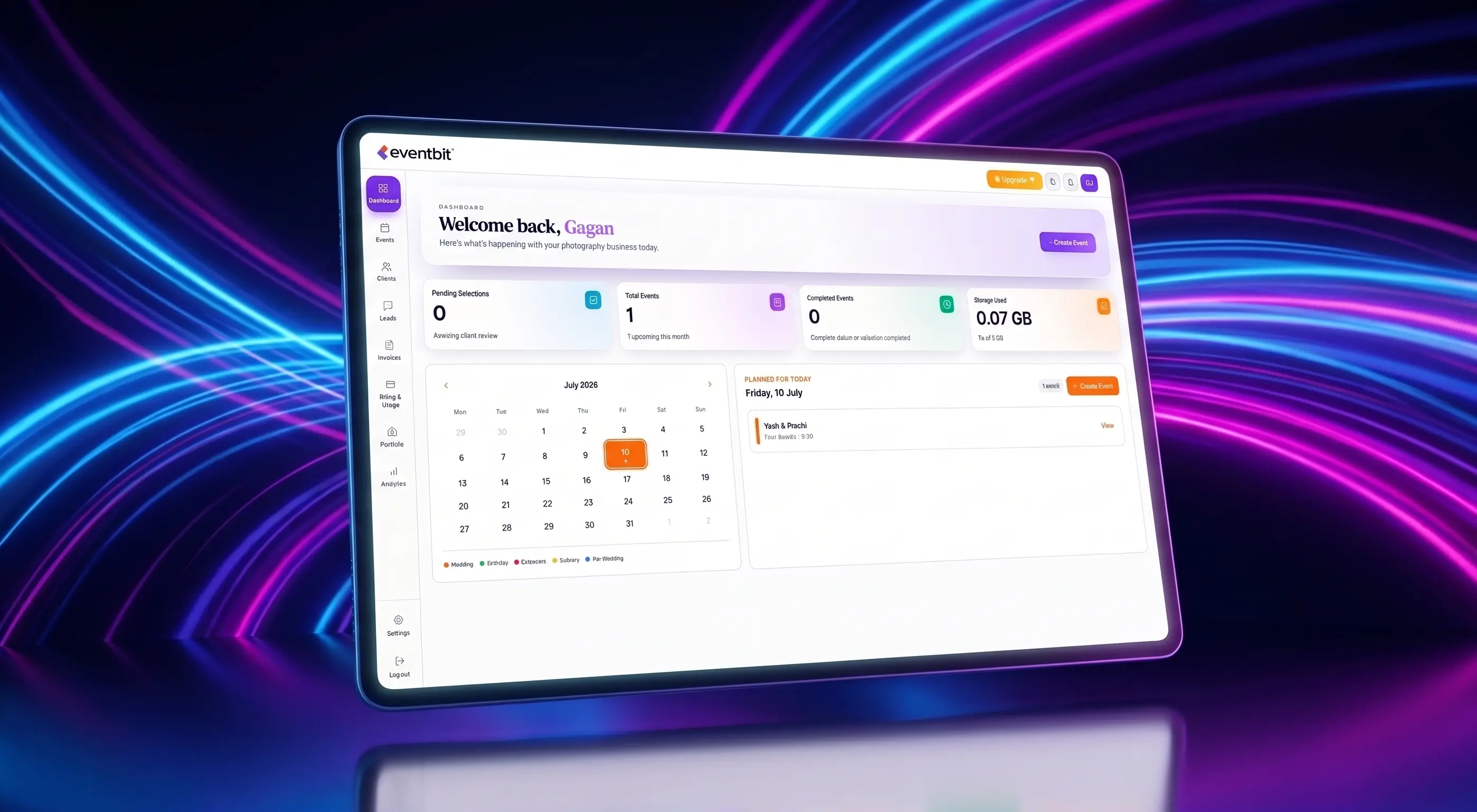
If you are still sending USB drives or raw cloud download folders, you are leaving money on the table and hurting your brand. Use a dedicated online gallery system like Eventbit. It allows your clients to view, select, and share their wedding pictures in a beautiful branded interface, turning a simple file transfer into a premium emotional experience.
EventBit Team
Product & Design
Frequently asked questions
How many wedding photos should a photographer deliver?
Typically, you should aim to deliver 50 to 80 fully edited images per hour of active coverage. For an 8-hour wedding, that is roughly 400 to 600 final photos. Focus on telling the complete story rather than bloating the gallery with duplicates.
What is the best way to handle rain or bad weather?
Embrace it. Keep clear umbrellas in your car, find indoor locations with large windows, and use a backlit speedlight behind the couple to turn raindrops into glowing, dramatic sparkles.
Run your whole wedding workflow in one place
AI face search, client selections, branded galleries and automated delivery — built for studios.
See pricing