Face search has quickly become a normal part of event delivery in India. Guests love it, and couples ask for it. But a face is personal data, and the people in your photos didn't sign your contract.
This isn't legal advice, and I'm not a lawyer. It's a practical guide to the questions photographers should be thinking about under India's Digital Personal Data Protection Act, 2023 (DPDP Act), and the habits that keep guests' trust. For anything specific to your business, speak to a qualified lawyer.
Key takeaways
- Treat faces as personal data, even in a casual gallery.
- Tell guests why you're asking for a selfie.
- Agree on face search with the client before the event.
- Be extra careful with galleries involving children.
- Set a retention period and remove old galleries.
- Ask your vendor what they store and how they use it.
Why this matters for photographers
Face search works by creating a mathematical description of each face, then comparing it with a guest's selfie. That description is linked to a real person, so treat it with the same care as a phone number or an address, or more.
Most guests won't ask how it works. But the ones who do are usually the ones whose trust matters: a corporate client's legal team, a parent asking about children's photos, or a guest at a private family function.
The DPDP Act in plain language
The DPDP Act sets rules for how digital personal data is handled in India. At a high level, it expects personal data to be processed for a clear purpose, with valid consent or another lawful basis, kept safe, and not held longer than needed. People also have rights over their data.
Your role and your vendor's can differ from event to event, so don't assume that using a compliant tool covers everything. Check with your lawyer what applies to you.
1. Make consent clear and simple
When a guest uploads a selfie, they should understand why. A short statement near the upload button does most of the work: what the selfie is used for, and nothing beyond that.
Tell the couple or the event client too. Mention face search in your contract, and agree on whether it should be turned on at all. Some families and companies won't want it, and that should be an easy conversation.
- Explain the purpose in one sentence.
- Make face search optional for guests.
- Keep a way to view the gallery without a selfie, if the client allows it.
- Record the client's decision in your contract.
2. Take extra care with children
Children's data deserves more care, and the DPDP Act has specific provisions on it. Be careful with school events, birthday parties and family functions. Keep those galleries private, ask the organiser how they want to handle them, and take legal advice if you regularly shoot events for schools.
3. Don't keep data longer than you need
Decide how long a gallery stays online, and tell your client. A wedding gallery might stay up for a year; a corporate event may need much less. When a gallery is no longer needed, remove it rather than leaving it online indefinitely.
Use expiring links and access controls so that old galleries don't remain open forever.
4. Questions to ask your software vendor
Before you use any face search tool, ask these in writing:
- What exactly do you store: selfies, face data, or both?
- Is face data used only for matching?
- Do you sell it, or use it to train public AI models?
- How long do you keep it, and how is it deleted?
- Where is the data stored, and who can access it?
- Do you have a published privacy policy and a contact for requests?
How Eventbit handles face data
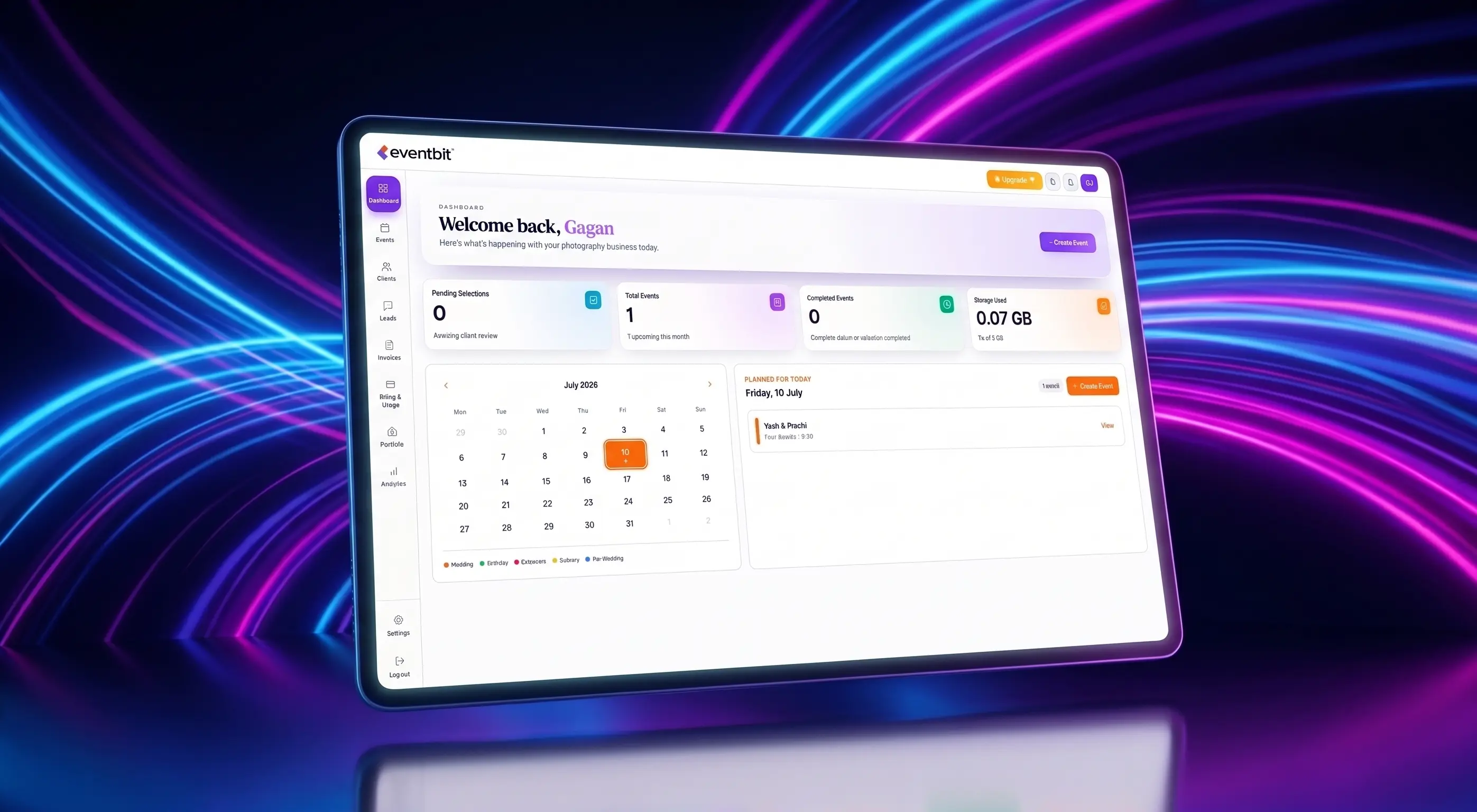
At Eventbit, face data is used to match guests to their own photos. It is never sold and never used to train public AI models, and galleries can be protected with a PIN or password. You can read the details on our DPDP compliance page and our privacy policy.
5. Add a short clause to your contract
A plain sentence in your contract prevents most misunderstandings. It should say that the gallery may use face search so guests can find their photos, how long the gallery stays online, and that the client can ask for face search to be turned off. Ask your lawyer to review the wording.
6. Sample wording for your gallery
Keep the note beside the selfie button short and plain. You could adapt something like this, and ask your lawyer to review it:
"Your selfie is used only to find your photos in this gallery. You can skip this and browse the gallery instead." Only include the second sentence if the client has agreed to let guests browse.
7. Handle deletion requests calmly
Sooner or later, someone will ask you to remove a photo or their data. Decide in advance who handles it, how quickly you respond, and how you confirm that it's done. A simple written process is enough for most studios.
Tell your client too. If a guest asks to be removed from a gallery, the couple or organiser should not be surprised by it.
Deven
Eventbit Team
Frequently asked questions
Is face recognition allowed at events in India?
It isn't banned as such, but personal data must be handled properly under the DPDP Act. Be clear about the purpose, respect consent, keep data safe, and take legal advice for your situation.
Do guests need to consent to face search?
Guests should understand why a selfie is requested before uploading it. Make it optional and explain the purpose in plain words. Ask a lawyer about the exact consent you need.
Does Eventbit sell face data?
No. Eventbit uses face data to match guests to their own photos. It is never sold and never used to train public AI models.
How long should I keep an event gallery online?
Only as long as it's useful, and agree the period with your client. Remove the gallery when it's no longer needed.
Run your whole wedding workflow in one place
AI face search, client selections, branded galleries and automated delivery — built for studios.
See pricing